
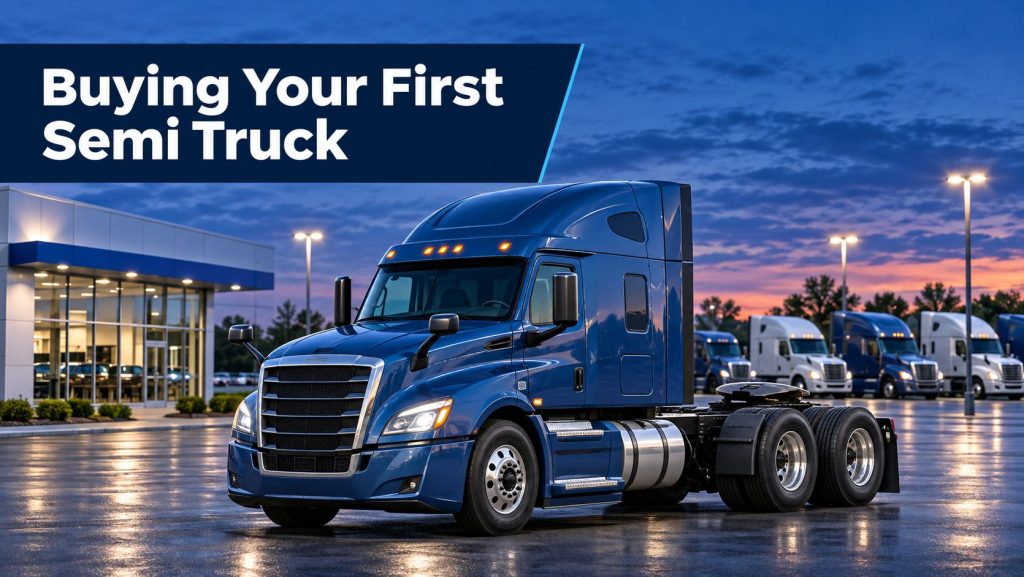
Buying your first semi truck is one of the biggest decisions you will make as an owner-operator or small fleet owner. The right truck can support reliable service, manageable operating costs, and long-term growth. The wrong truck can create repair bills, downtime, weight problems, and payments that are difficult to carry when freight slows down.
This guide explains how to define your needs, compare trucks, estimate the true cost of ownership, inspect a candidate, and complete the purchase. Specifications and legal requirements vary by application, vehicle, state, and operating authority, so verify critical details with the manufacturer, lender, insurer, and applicable agencies before signing.
Decide What Work the Truck Must Do
Start with the freight and operating conditions—not a preferred badge, paint color, or horsepower number. A truck designed for long-haul dry van work may be a poor fit for heavy regional hauling, construction sites, tanker service, or frequent urban deliveries.
Write down the routes, trailer types, typical payloads, maximum expected combination weight, terrain, annual mileage, climate, idle time, and time spent away from home. Also consider loading docks, customer yards, bridge restrictions, and whether the truck will regularly operate on unpaved surfaces.
- Long-haul: fuel economy, sleeper comfort, storage, aerodynamics, and nationwide service support often matter most.
- Regional: maneuverability, useful fuel capacity, driver comfort, and a balance between efficiency and durability are important.
- Local or vocational: visibility, turning radius, start-stop durability, PTO provisions, axle capacity, and body or trailer compatibility may outweigh highway aerodynamics.
- Heavy haul: frame strength, cooling capacity, torque, axle ratings, gearing, brakes, and legal weight configuration require careful engineering.
If the operation is not yet clearly defined, review How to Spec a Semi Truck for Your Operation before shopping.
Set a Complete Ownership Budget
The purchase price is only one part of the investment. A lower-priced truck can be more expensive if it immediately needs tires, brakes, emissions repairs, an engine overhaul, or extended downtime. Build a budget that includes the truck, taxes, registration, insurance deposits, inspection, financing fees, initial maintenance, permits, and working capital.
Keep a repair reserve separate from normal operating cash. A new owner may have revenue delays while fuel, insurance, tolls, maintenance, and loan payments continue. The reserve needed depends on the truck’s age, warranty, condition, duty cycle, and the stability of the freight plan.
| Cost Category | Examples | Why It Matters |
|---|---|---|
| Purchase and financing | Down payment, principal, interest, fees | Determines fixed monthly obligation |
| Startup compliance | Registration, permits, apportioned plates, taxes | Must be completed before applicable operations |
| Insurance | Liability, physical damage, cargo, bobtail or non-trucking | Pricing can change the affordability of a truck |
| Operating | Fuel, DEF, tolls, tires, routine service | Creates the recurring cost per mile |
| Repair reserve | Unexpected mechanical and electrical repairs | Protects cash flow during breakdowns |
| Downtime | Lost revenue, towing, lodging, substitute equipment | Can cost more than the repair itself |
New vs. Used Semi Trucks
A new truck usually offers the latest safety and efficiency technology, a factory warranty, and the ability to order a precise specification. It also brings a higher purchase price, greater depreciation, and potentially higher insurance and finance costs.
A used truck may lower the entry price and can be available immediately. Its condition, maintenance history, prior duty cycle, and remaining component life are critical. Two trucks with the same year and mileage can have very different values if one has complete records and the other has unknown service history.
Compare both paths in New vs Used Commercial Trucks. If considering used equipment, plan for an independent inspection using How to Inspect a Used Semi Truck.
Choose the Right Cab and Chassis
Day Cab or Sleeper
A day cab is generally lighter, shorter, and easier to maneuver. It may provide more payload capacity and a lower purchase cost for local or regional work where the driver returns home. A sleeper adds living space for overnight routes but increases weight, length, purchase price, and systems that require maintenance.
Wheelbase and Fifth-Wheel Position
Wheelbase affects ride, turning radius, weight distribution, and trailer clearance. A sliding fifth wheel can help adjust axle loading, but its usable range depends on frame layout, sleeper clearance, suspension, and trailer geometry. Confirm that the tractor can couple to the intended trailers without cab, frame, landing-gear, or fairing interference.
Axle Ratings and Weight Limits
Review the Gross Vehicle Weight Rating, Gross Axle Weight Ratings, and Gross Combination Weight Rating on the vehicle certification label and manufacturer documentation. The lowest-rated component can limit the usable capacity. Learn the terminology in Understanding Truck Weight Ratings: GVWR, GCWR, and GAWR.
Match the Powertrain to the Application
Engine
Horsepower alone does not determine whether an engine is right for the job. Compare torque output, torque curve, displacement, cooling package, engine brake, expected gross weight, terrain, cruise speed, rear-axle ratio, and transmission gearing. Higher output can help in demanding service but may add purchase cost and fuel consumption when the specification exceeds the work.
For a system-level overview, see How Commercial Truck Engines Work. Ask for engine-hour and idle-hour data as well as mileage, because extensive idling can add wear that the odometer does not show.
Transmission
Manual, automated manual, and automatic transmissions offer different driving characteristics and maintenance considerations. The best choice depends on terrain, traffic, driver experience, payload, startability, and resale plans. Review Manual vs Automated Manual vs Automatic Transmissions and How to Choose a Commercial Truck Transmission.
Rear-Axle Ratio and Driveline
The rear-axle ratio works with tire size and transmission gearing to determine engine speed, grade performance, and startability. Tall gearing may reduce engine speed on level highways, while numerically higher gearing may better support heavy loads or steep grades. The whole specification must work together; see How Commercial Truck Driveline Systems Work.
Evaluate Fuel Economy and Aerodynamics
Fuel is usually one of the largest operating expenses. Aerodynamic tractors, roof fairings matched to trailer height, side extenders, low-rolling-resistance tires, sensible cruising speed, and correct gearing can reduce consumption in highway service. Vocational operations may benefit less from highway aerodynamic equipment and more from lower weight, cooling capacity, or maneuverability.
Do not rely on a seller’s fuel-economy claim without context. Results change with payload, speed, terrain, weather, idle time, trailer type, tires, and driver behavior. Compare trucks using your own expected duty cycle.
Understand Emissions and Aftertreatment Systems
Modern diesel trucks may use exhaust gas recirculation, a diesel particulate filter, selective catalytic reduction, diesel exhaust fluid, sensors, and electronic controls. These systems reduce regulated emissions but require correct operation and maintenance. Frequent short trips, excessive idling, neglected fault codes, contamination, or improper repairs can cause expensive problems.
Check for active and stored diagnostic codes, regeneration history when available, visible leaks, warning lights, and evidence of tampering. Emissions-component removal or defeat devices can create legal, registration, resale, and operational problems. Verify that the vehicle remains in its certified configuration.
Inspect a Used Truck Before Buying
A professional pre-purchase inspection should be independent of the seller. It should cover the engine, cooling system, aftertreatment, transmission, clutch if equipped, driveline, axles, suspension, steering, brakes, frame, fifth wheel, tires, wheels, electrical system, cab, HVAC, and safety equipment.
- Inspect the truck cold so startup behavior is not hidden.
- Look for fluid leaks, blow-by concerns, coolant contamination, corrosion, damaged wiring, and uneven tire wear.
- Measure brake and tire condition rather than relying on appearance.
- Scan all available vehicle modules for active, inactive, and frequently recurring faults.
- Road-test the truck under conditions that reveal shifting, braking, steering, vibration, and temperature behavior.
- Confirm that the VIN and major component serial numbers match the records.
Use the detailed process in How to Inspect a Used Semi Truck. If the seller will not allow an independent inspection or diagnostic scan, treat that as a serious warning sign.
Review Maintenance and Ownership Records
Ask for dated invoices, preventive-maintenance records, warranty repairs, oil analysis, inspection reports, and documentation for major component replacements. A verbal statement that an engine was rebuilt is not the same as an invoice identifying the shop, date, mileage, parts, labor, and warranty.
Verify the title status, lien release, VIN, seller identity, and odometer disclosure required for the transaction. Check for salvage, rebuilt, flood, or other title brands. Requirements differ by jurisdiction, so confirm the transfer process with the motor-vehicle agency before money changes hands.
Compare Dealer and Private-Party Purchases
A reputable dealer may offer financing help, trade-in support, inspection documentation, limited warranties, and a defined process for title work. A private seller may offer a lower price and direct knowledge of the truck’s history. Neither source eliminates the need for independent verification.
Read every warranty and service contract closely. Identify covered components, exclusions, deductibles, claim authorization rules, repair locations, mileage or time limits, and whether consequential damage is excluded. Get promises in writing.
Arrange Financing and Insurance Before Committing
Compare the total amount financed, annual percentage rate, term, payment schedule, fees, prepayment terms, collateral requirements, and personal guarantees—not just the monthly payment. A long term can lower the payment while increasing interest and the risk of owing more than the truck is worth.
Obtain insurance quotes for the specific VIN and planned operation before purchase. Premiums depend on factors such as experience, location, radius, cargo, vehicle value, safety history, coverage limits, and operating authority. A truck that fits the purchase budget may not fit the insurance budget.
Complete Registration and Compliance Steps
Buying the truck does not automatically make it legal to operate. Depending on the operation, you may need USDOT registration, interstate operating authority, insurance filings, Unified Carrier Registration, apportioned registration under IRP, fuel-tax licensing under IFTA, state permits, and Heavy Highway Vehicle Use Tax filing. Some requirements apply only to particular vehicle weights, commodities, routes, or business structures.
First-time interstate carriers should review the Federal Motor Carrier Safety Administration’s registration and New Entrant requirements. Build the compliance schedule before accepting freight; see the Owner-Operator Startup Guide and DOT Compliance Guide for Small Trucking Companies.
Questions to Ask Before You Buy
- Why is the truck being sold?
- What freight, weight, terrain, and route type did it run?
- Can the seller provide complete maintenance and repair records?
- Are there active fault codes, warning lights, leaks, or known defects?
- Have the engine, transmission, axles, aftertreatment, or major electronics been replaced or rebuilt?
- Is the title clear, and are all liens released?
- What warranty remains, and is it transferable?
- Can an independent shop inspect and scan the truck?
- What repairs or maintenance will be due in the next 90 days?
- Does the specification match the intended trailer, weight, terrain, and route?
Common First-Truck Buying Mistakes
- Buying before securing freight: the payment starts even if the truck sits.
- Shopping by appearance: paint and chrome do not reveal mechanical condition or suitability.
- Choosing on monthly payment alone: term length, fees, interest, and repair exposure matter.
- Skipping the independent inspection: a road test cannot replace measurements and diagnostics.
- Ignoring weight and gearing: the wrong specification can hurt payload, performance, and fuel economy.
- Using all cash for the down payment: a truck still needs fuel, insurance, maintenance, and emergency reserves.
- Assuming a warranty covers everything: exclusions and claim procedures can be significant.
- Failing to price insurance first: coverage may be more expensive or harder to obtain than expected.
First Semi Truck Buying Checklist
- Define freight, routes, trailer, payload, terrain, and annual mileage.
- Set purchase, operating, and repair-reserve budgets.
- Obtain financing and insurance terms for the actual truck.
- Verify engine, transmission, axle, wheelbase, weight, and fifth-wheel specifications.
- Review title, lien, VIN, mileage, maintenance, and warranty records.
- Complete an independent inspection, diagnostic scan, and road test.
- Estimate near-term tires, brakes, fluids, filters, and repair needs.
- Calculate realistic cost per mile and break-even revenue.
- Confirm registration, tax, authority, permit, and compliance requirements.
- Put all purchase terms, repairs, and warranties in writing.
Related Guides
- New vs Used Commercial Trucks
- How to Inspect a Used Semi Truck
- How to Spec a Semi Truck for Your Operation
- Understanding Truck Weight Ratings: GVWR, GCWR, and GAWR
- Semi Truck Preventive Maintenance Guide
- DOT Inspection Guide
- Owner-Operator Startup Guide
- DOT Compliance Guide for Small Trucking Companies
Regulatory References
- FMCSA: Getting Started with Registration
- FMCSA: New Entrant Safety Assurance Program
- Unified Carrier Registration
- IRS: Form 2290, Heavy Highway Vehicle Use Tax Return
- EPA: Heavy-Duty Vehicle and Engine Emissions Regulations
Final Thoughts
The best first semi truck is not necessarily the newest, cheapest, or most powerful. It is the truck whose specification, condition, payment, operating cost, and service support fit a clearly defined business plan.
Slow the purchase down enough to verify the records, inspect the equipment, price the insurance, and calculate the full cost per mile. A careful buying process cannot remove every risk, but it can prevent many of the expensive surprises that make first-time truck ownership difficult.