
Landoll Traveling Axle Trailer
Quick Facts
- Manufacturer: Landoll Corporation
- Trailer Type: Traveling Axle Trailer
- Model: Landoll Traveling Axle Trailer
- Common Lengths: 40 ft, 45 ft, 48 ft, 53 ft
- Common Width: 102 inches
- Trailer Construction: Heavy-Duty Steel Construction
- Common Axle Configurations: Tandem Axle, Tri-Axle, Quad Axle
- Typical Capacity: 35 to 80 Tons Depending on Configuration
- Primary Applications: Construction Equipment Transport, Heavy Equipment Hauling, Agricultural Equipment Transport, Municipal Equipment Transport
- Common Freight Types: Excavators, Dozers, Wheel Loaders, Pavers, Cranes, Tractors, Forestry Equipment
- Loading System: Hydraulic Traveling Axle System
- Suspension Options: Air Ride or Spring Ride
- Production Status: In Production
Overview
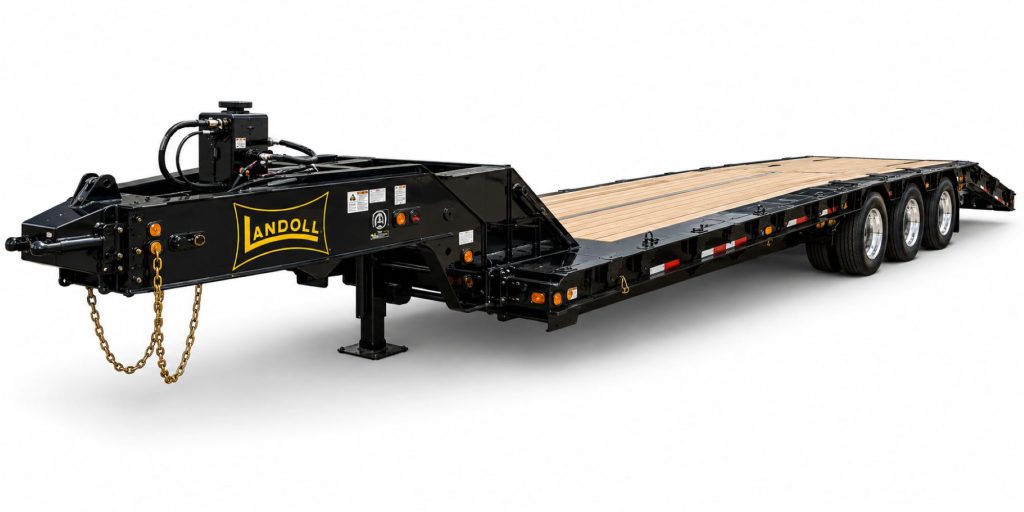
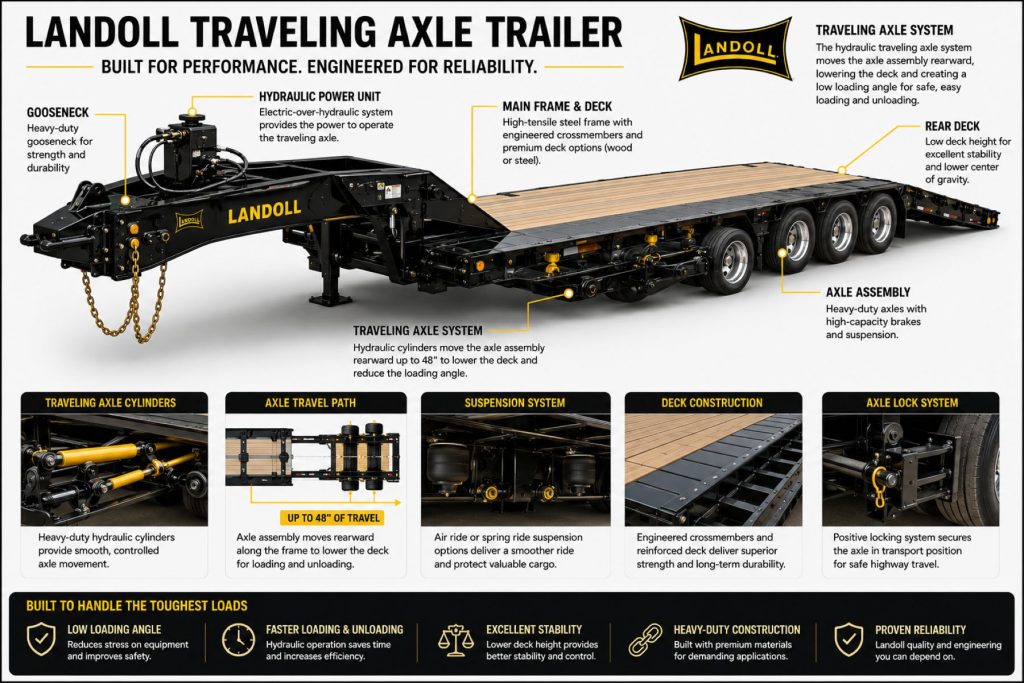
The Landoll Traveling Axle Trailer is one of the most recognized traveling axle trailer designs in North America. Built for heavy equipment transportation, the trailer utilizes a hydraulic traveling axle system that lowers the deck during loading operations, allowing equipment to be loaded with a significantly reduced loading angle.
Landoll trailers are particularly popular among construction contractors, equipment dealers, rental fleets, municipalities, and specialized hauling companies that transport large machinery on a regular basis. The traveling axle design improves loading efficiency while reducing stress on equipment during loading and unloading.
Key Characteristics
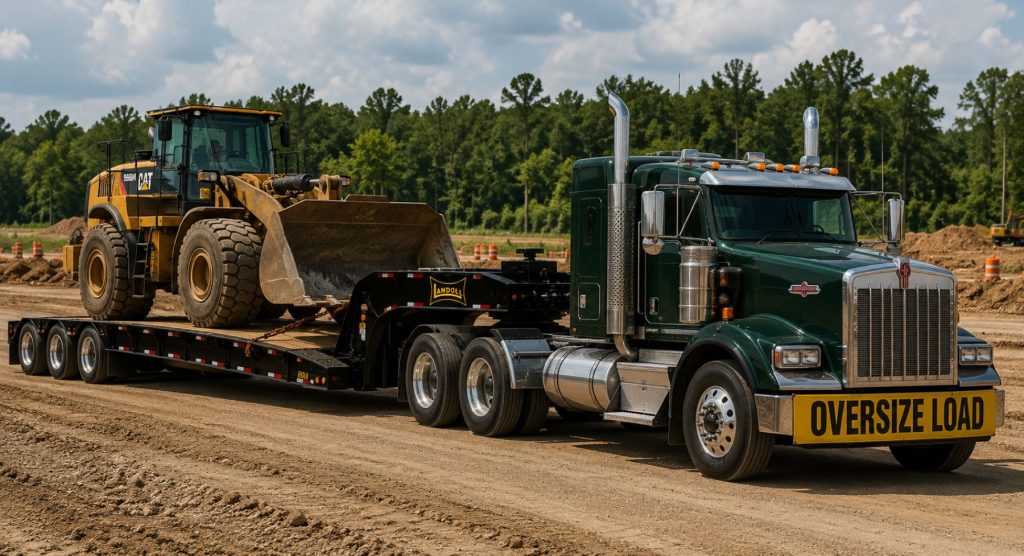
The Landoll Traveling Axle Trailer combines heavy-duty construction with a hydraulic axle movement system that allows the trailer deck to lower toward the ground. This design improves loading safety while reducing the need for steep loading ramps.
Its versatility allows operators to transport a wide variety of wheeled and tracked equipment while maintaining excellent stability and load distribution.
Common Specifications
Overall Length
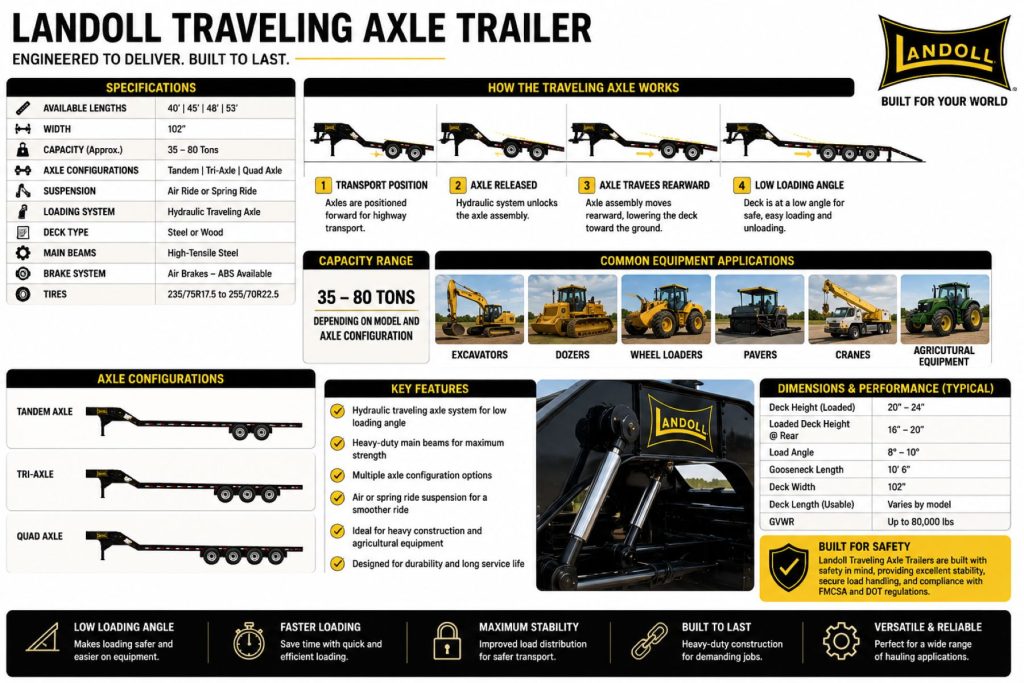
Typically available in 40-foot, 45-foot, 48-foot, and 53-foot configurations.
Width
Standard legal width is 102 inches.
Trailer Construction
Heavy-duty steel frame construction designed for demanding hauling applications.
Capacity
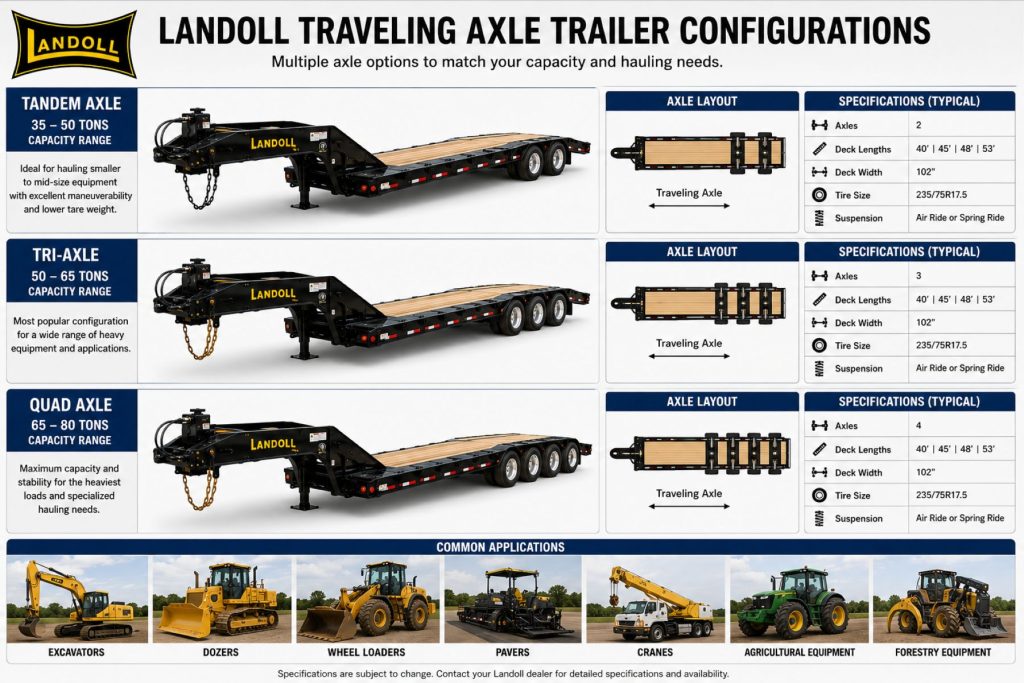
Typically rated from approximately 35 to 80 tons depending on model and axle configuration.
Axle Configurations
Available in tandem axle, tri-axle, and quad axle configurations.
Suspension
Available with air ride or spring ride suspension systems.
Loading System
Hydraulic traveling axle mechanism that moves the axle assembly rearward during loading.
Deck Material
Steel deck or wood deck options depending on application requirements.
Equipment Compatibility
Designed for transporting wheeled and tracked construction, agricultural, industrial, and municipal equipment.
Landing Gear
Heavy-duty commercial landing gear system.
Brake System
Air brake system compliant with FMCSA and DOT requirements.
Tire Options
Commercial heavy-duty trailer tires selected according to trailer capacity and axle configuration.
GVWR Range
Varies by model and axle configuration, commonly supporting loads from 35 to 80 tons.
Common Applications
- Construction Equipment Transportation
- Excavator Hauling
- Dozer Transportation
- Wheel Loader Hauling
- Paver Transport
- Crane Transportation
- Agricultural Equipment Hauling
- Municipal Equipment Transport
- Forestry Equipment Transportation
- Industrial Equipment Moving
Advantages
- Low loading angle
- Fast loading and unloading
- Excellent loading stability
- No large loading ramps required
- Handles heavy machinery efficiently
- Reliable hydraulic operation
- Strong structural durability
- Improved operator safety
Limitations or Considerations
- Higher purchase cost
- Hydraulic system maintenance required
- More complex than standard trailers
- Additional trailer weight
- More moving components
- Specialized repair requirements
- Hydraulic failures can affect loading operations
- Higher maintenance costs than simple equipment trailers
Driver and Operator Considerations
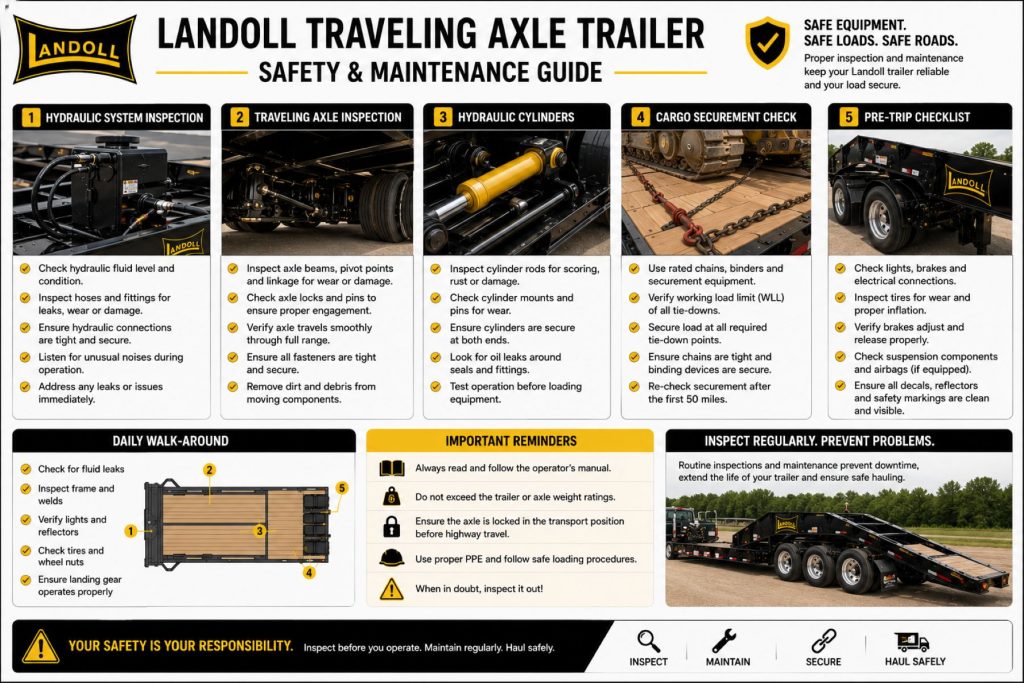
Operators should inspect the traveling axle mechanism before each use and ensure all hydraulic systems, cylinders, locking assemblies, and axle travel components are functioning correctly. Proper loading procedures should always be followed to maintain safe weight distribution and trailer stability.
Maintenance and Ownership Notes
Routine maintenance includes hydraulic system inspections, lubrication of moving components, axle travel mechanism inspections, brake inspections, suspension maintenance, tire inspections, lighting checks, and structural frame evaluations. Preventive maintenance helps maximize reliability and service life.
Buying Considerations
- Equipment weight requirements
- Trailer capacity needs
- Hydraulic system condition
- Traveling axle mechanism condition
- Axle configuration requirements
- New versus used pricing
- Maintenance history
- Dealer support availability
- Fleet compatibility
- Operating environment
Common Brands or Manufacturers
- Landoll Corporation
- Talbert Manufacturing
- Trail King Industries
- Eager Beaver
- Towmaster
- Felling Trailers
- Interstate Trailers
Variants and Related Configurations
- Traveling Axle Trailer
- Hydraulic Tail Trailer
- Equipment Trailer
- Tag Trailer
- Heavy Equipment Trailer
- Construction Equipment Trailer
- Lowboy Trailer
- Specialized Haul Trailer
Comparison to Similar Trailers
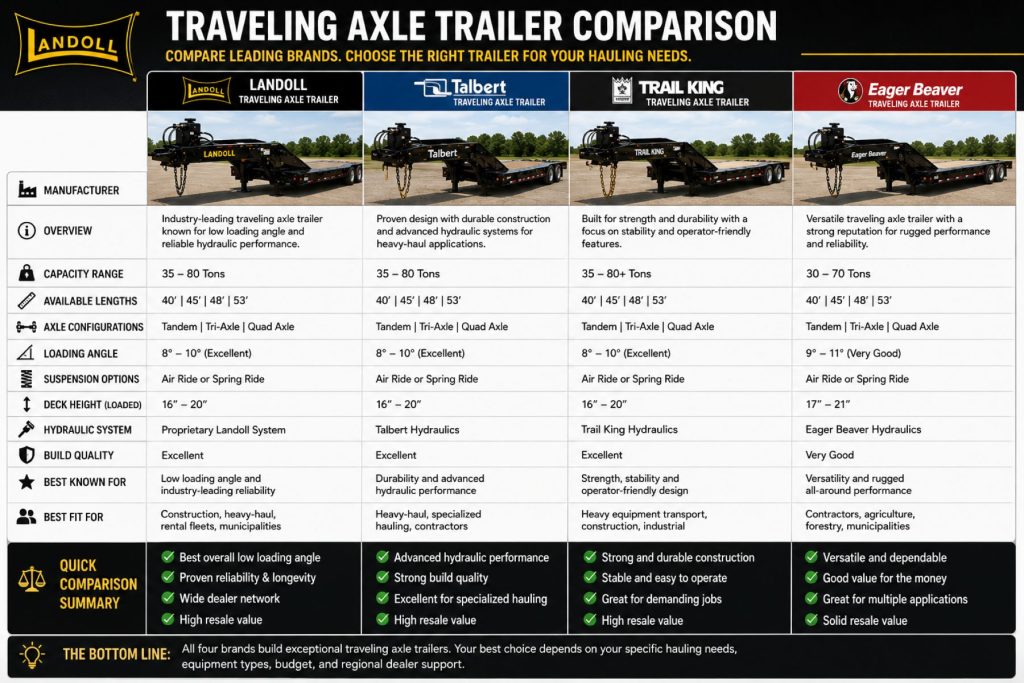
The Landoll Traveling Axle Trailer is commonly compared to Talbert Traveling Axle, Trail King Traveling Axle, and Eager Beaver Traveling Axle trailers. Landoll is particularly well known for its traveling axle technology and widespread use in equipment hauling applications. Compared to hydraulic tail trailers, traveling axle trailers typically provide lower loading angles and improved stability for larger equipment. Compared to conventional equipment trailers, they offer safer and more efficient loading operations.
Best Fit For
- Heavy-haul fleets
- Construction contractors
- Equipment rental companies
- Municipal fleets
- Utility contractors
- Agricultural operations
- Forestry companies
- Industrial service providers
- Equipment dealerships
Related Equipment
- Excavators
- Dozers
- Wheel Loaders
- Backhoes
- Cranes
- Forestry Equipment
- Road Construction Equipment
- Agricultural Tractors
- Pavers
Related Freight Types
- Construction Equipment
- Agricultural Equipment
- Forestry Equipment
- Utility Equipment
- Municipal Equipment
- Industrial Equipment
- Road Construction Equipment
- Heavy Machinery
Related Trailer Types
- Traveling Axle Trailers
- Hydraulic Tail Trailers
- Equipment Trailers
- Tag Trailers
- Lowboy Trailers
- Heavy Haul Trailers
- Construction Equipment Trailers
Related Trailer Models
- Talbert Traveling Axle Trailer
- Trail King Traveling Axle Trailer
- Eager Beaver Traveling Axle Trailer
- Landoll Traveling Axle Trailer
- Talbert Hydraulic Tail Trailer
- Trail King Hydraulic Tail Trailer
Related Guides
Regulatory and Compliance Notes
Landoll Traveling Axle Trailers must comply with FMCSA regulations regarding cargo securement, braking systems, lighting requirements, axle weight limits, trailer dimensions, and equipment transportation standards. All machinery must be secured using approved chains, binders, and tie-down equipment.
Real World Operating Notes
Landoll Traveling Axle Trailers are among the most commonly recognized traveling axle trailers in the heavy equipment transportation industry. Their ability to create extremely low loading angles makes them especially popular with equipment rental companies, paving contractors, municipalities, and specialized hauling fleets.
Many operators specifically request “a Landoll” even when referring to traveling axle trailers in general because of the brand’s strong reputation within the equipment hauling industry.
Frequently Asked Questions
What is a Landoll Traveling Axle Trailer used for?
It is used to transport heavy equipment while providing a low loading angle through its hydraulic traveling axle system.
How does a Landoll Traveling Axle Trailer work?
The axle assembly moves rearward during loading operations, lowering the deck closer to the ground and creating a gradual loading angle.
What equipment can be hauled on a Landoll Traveling Axle Trailer?
Excavators, dozers, wheel loaders, pavers, cranes, tractors, forestry equipment, and various heavy machinery.
What are the advantages of a Landoll Traveling Axle Trailer?
Lower loading angles, improved safety, faster loading, better stability, and efficient heavy equipment transport.
Who commonly operates Landoll Traveling Axle Trailers?
Construction contractors, equipment rental companies, municipalities, utility fleets, agricultural operators, heavy-haul fleets, and industrial service providers commonly operate Landoll Traveling Axle trailers.
Availability and Where to Find
Landoll Traveling Axle Trailers can be purchased through authorized Landoll dealers, heavy equipment trailer dealerships, commercial equipment distributors, equipment auctions, fleet liquidation sales, and used trailer marketplaces. Buyers evaluating used units should carefully inspect hydraulic systems, traveling axle components, frame condition, suspension systems, brakes, tires, lighting systems, and maintenance records before purchasing.
Support Trucking Families
Truck Equipment Atlas supports the mission of Grey Cross, a nonprofit dedicated to helping families of truck drivers who lose their lives while on the road. As the site grows, part of its mission is to bring awareness and support to these families.
Podcast or Video Section
Learn More Through Audio and Video
Truck Equipment Atlas will continue expanding with podcast episodes, interviews, and equipment breakdowns to help drivers and fleets better understand trucks and equipment.
Follow the Growth of Truck Equipment Atlas
Truck Equipment Atlas continues to expand with new truck profiles, trailer coverage, diesel engine pages, equipment system resources, manufacturer information, and educational guides.
Visit our Site Updates page to explore recent additions, project milestones, and upcoming resources as we continue building one of the industry’s growing commercial trucking equipment reference libraries.
View the Latest Site Updates: Truck Equipment Atlas Site Updates