
Oversize Load Transportation Guide: Understanding Oversized Freight and Specialized Transport
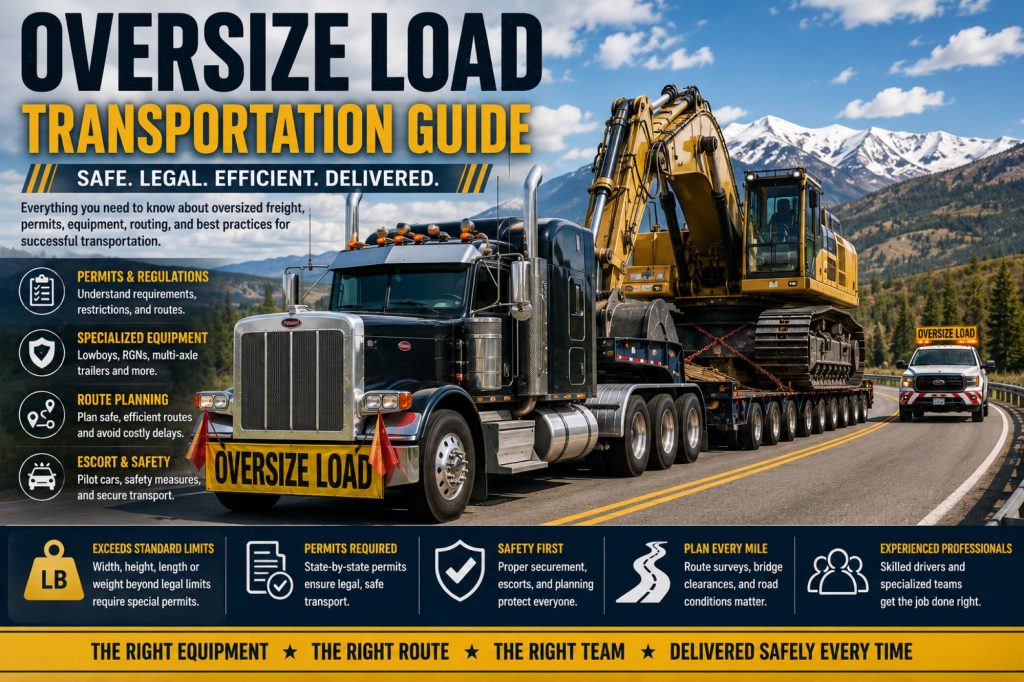
Oversize load transportation involves moving cargo that exceeds standard legal dimensions and requires special permits, routing, and safety measures.
From construction equipment and industrial machinery to bridge beams and wind turbine components, oversized loads are some of the most challenging shipments in the trucking industry.
Because these loads often exceed legal width, height, length, or weight limits, they require careful planning, specialized equipment, and experienced operators to ensure safe transportation.
This guide explains what qualifies as an oversize load, the equipment used, permit requirements, and best practices for safely transporting oversized freight.
What Is an Oversize Load?
An oversize load is cargo that exceeds one or more standard legal dimensions established by state or federal regulations.
Common legal dimensions in many states include:
- Width: 8 feet 6 inches
- Height: 13 feet 6 inches
- Length: Varies by state
- Weight: 80,000 pounds gross vehicle weight
Any shipment exceeding these limits may require:
- Oversize permits
- Specialized routing
- Escort vehicles
- Warning signs and lighting
- Additional state approvals
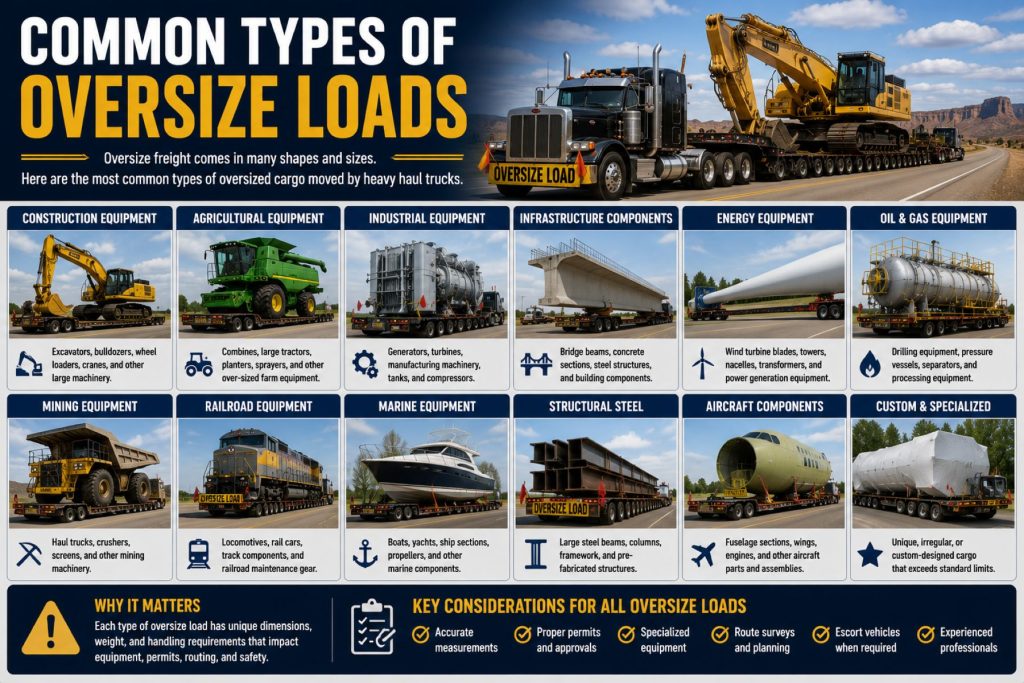
Common Types of Oversize Freight
Construction Equipment
- Excavators
- Bulldozers
- Wheel loaders
- Cranes
Agricultural Equipment
- Combines
- Large tractors
- Sprayers
Industrial Equipment
- Generators
- Manufacturing machinery
- Tanks
- Compressors
Infrastructure Components
- Bridge beams
- Concrete sections
- Steel structures
Energy Equipment
- Wind turbine blades
- Transformers
- Power generation equipment
Oil and Gas Equipment
- Drilling equipment
- Compressors
- Processing equipment
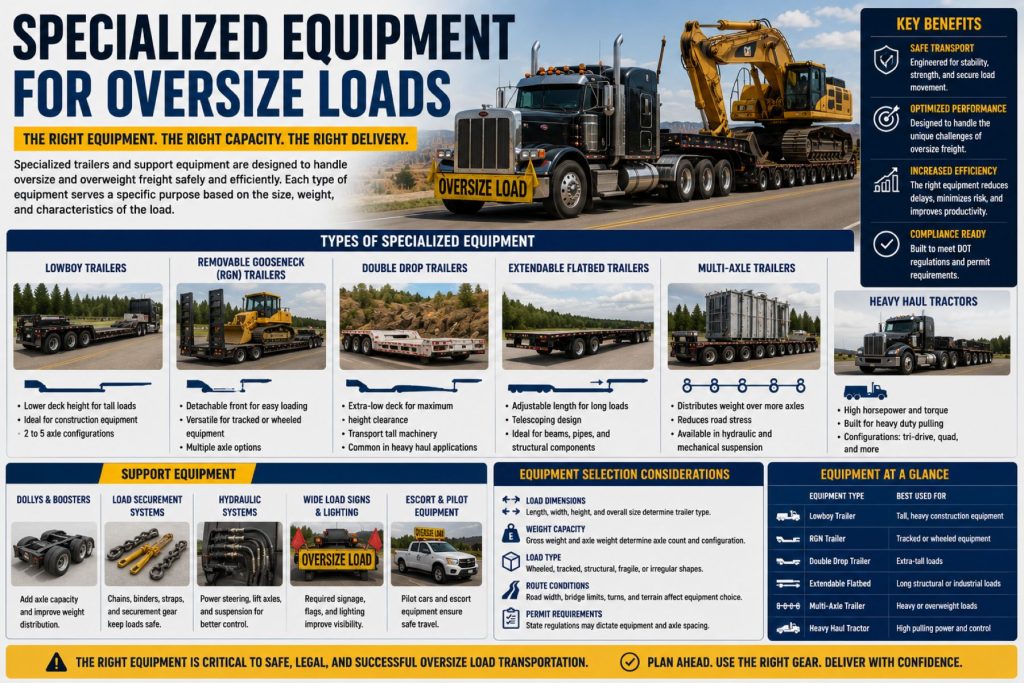
Equipment Used for Oversize Transportation
Lowboy Trailers
Ideal for tall equipment and heavy machinery.
Removable Gooseneck (RGN) Trailers
Allow equipment to be driven onto the trailer.
Double Drop Trailers
Used for exceptionally tall loads.
Extendable Flatbed Trailers
Designed for long cargo.
Multi-Axle Trailers
Distribute weight across additional axles.
Heavy Haul Tractors
Provide the power needed to move oversized freight.
Why Specialized Equipment Is Necessary
Oversized freight often requires:
- Lower deck heights
- Increased axle capacity
- Enhanced stability
- Specialized loading methods
- Better weight distribution
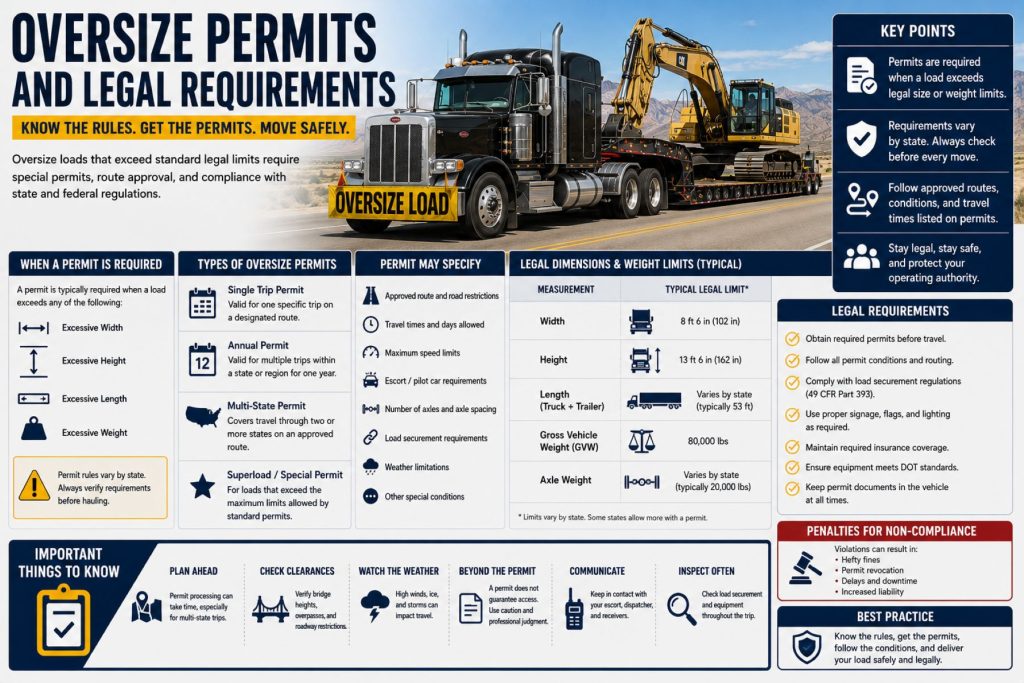
Oversize Permit Requirements
Permit requirements vary by state.
Permits may be needed for:
- Excessive width
- Excessive height
- Excessive length
- Excessive weight
Permits often specify:
- Approved routes
- Travel times
- Escort requirements
- Speed restrictions
- Safety equipment requirements
Travel Restrictions
Many states restrict oversized loads from traveling:
- At night
- During holidays
- During peak traffic hours
- In severe weather conditions
Drivers should always review permit conditions before beginning a trip.
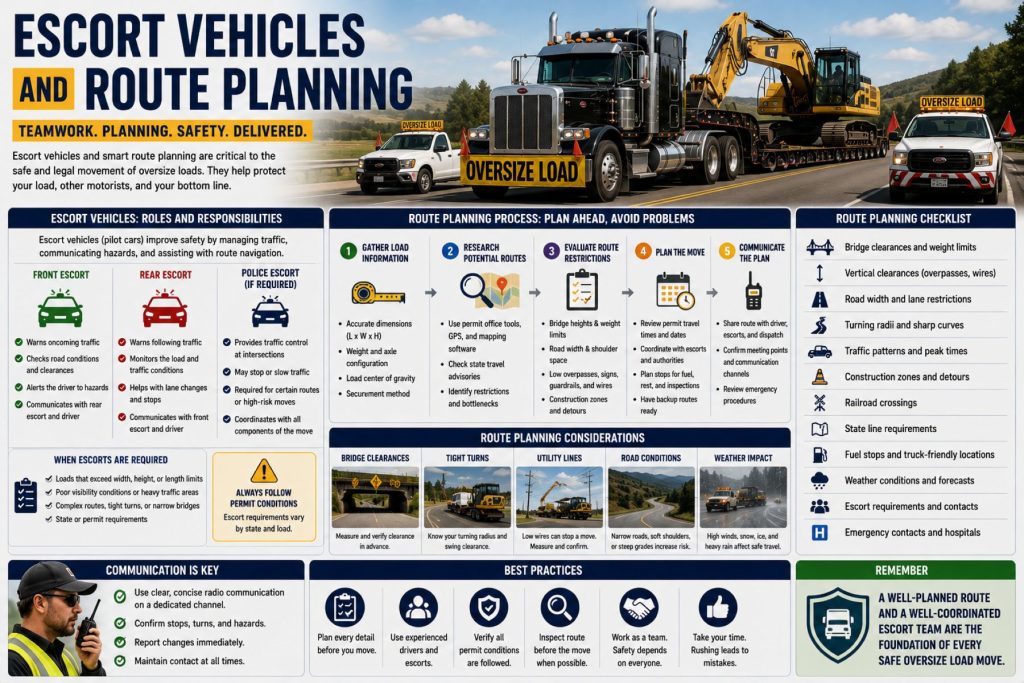
Escort Vehicles and Pilot Cars
Escort vehicles help improve safety and assist with oversized load transportation.
Responsibilities include:
- Traffic control
- Height clearance monitoring
- Communication with the driver
- Warning approaching traffic
Some loads may require:
- Front escort vehicle
- Rear escort vehicle
- Police escorts
Route Planning
Successful oversize transportation requires careful route planning.
Drivers and carriers must consider:
- Bridge clearances
- Weight restrictions
- Construction zones
- Utility lines
- Sharp turns
- Traffic conditions
Route surveys are often necessary before movement.
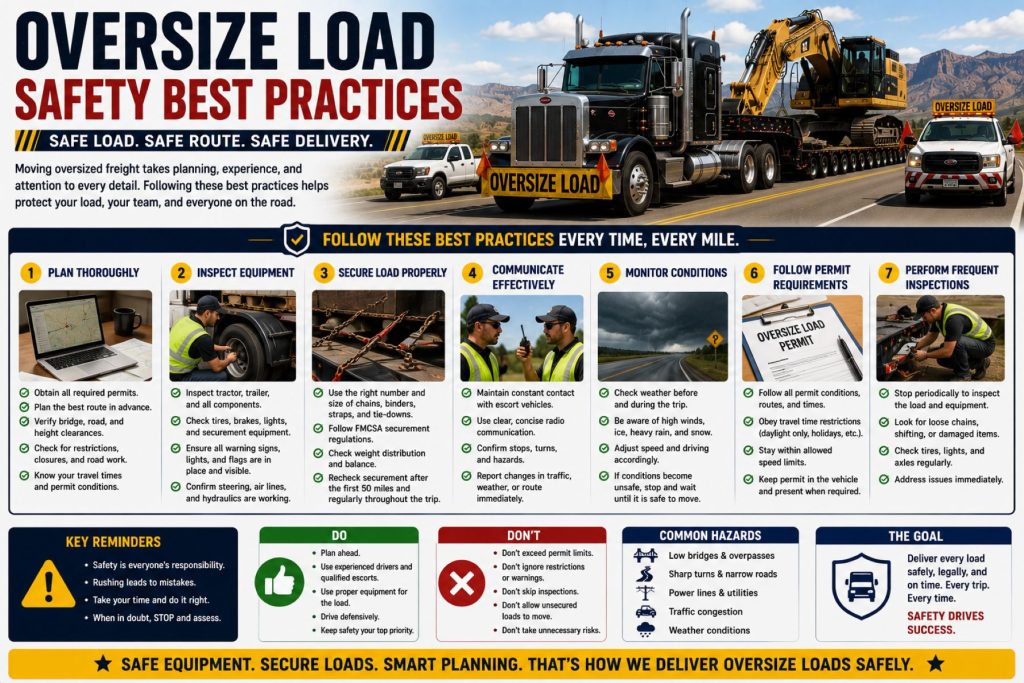
Oversize Load Safety Best Practices
Conduct Thorough Planning
Review permits and routes carefully.
Inspect Equipment
Verify the condition of tractors and trailers.
Secure Cargo Properly
Follow all securement regulations.
Communicate Effectively
Maintain contact with escort vehicles.
Monitor Weather Conditions
Weather can significantly impact oversized loads.
Follow Permit Restrictions
Failure to comply can result in fines and delays.
Perform Frequent Inspections
Check load securement throughout the trip.
Common Challenges of Oversize Transportation
Height Restrictions
Bridges and utility lines can create problems.
Route Limitations
Not all roads are suitable for oversized loads.
Traffic Congestion
Urban areas present unique challenges.
Weather Conditions
High winds can impact load stability.
Permit Delays
Multi-state shipments often require extensive coordination.
Industries That Depend on Oversize Transportation
- Construction
- Energy
- Agriculture
- Manufacturing
- Mining
- Infrastructure
- Oil and Gas
- Utilities
Frequently Asked Questions
What qualifies as an oversize load?
Any shipment that exceeds legal size or weight limits.
Do all oversize loads require permits?
Most oversized loads require permits, although requirements vary by state.
Why are escort vehicles used?
To improve safety and assist with traffic management and route clearance.
What trailers are used for oversize loads?
Lowboys, RGNs, double drops, extendable trailers, and multi-axle trailers.
Can oversize loads travel at night?
It depends on state permit restrictions.
Are special drivers required for oversize loads?
Many carriers require experienced drivers due to the complexity of oversized transportation.
Related Truck Types
- Heavy Haul Trucks
- Day Cab Trucks
- Tri-Axle Trucks
- Vocational Trucks
Related Trailer Types
- Lowboy Trailers
- RGN Trailers
- Double Drop Trailers
- Extendable Flatbed Trailers
Related Freight Types
- Heavy Haul Freight
- Construction Equipment Freight
- Industrial Freight
- Machinery Freight
Related Guides
- Heavy Haul Freight Guide
- Flatbed vs Step Deck vs Double Drop
- Choosing the Right Trailer for Your Freight
Final Thoughts
Oversize load transportation is one of the most specialized sectors of commercial trucking. Moving oversized freight safely requires careful planning, specialized equipment, permit compliance, and experienced operators.
Understanding how oversized transportation works can help carriers, drivers, and shippers move large freight safely, efficiently, and legally throughout North America.